


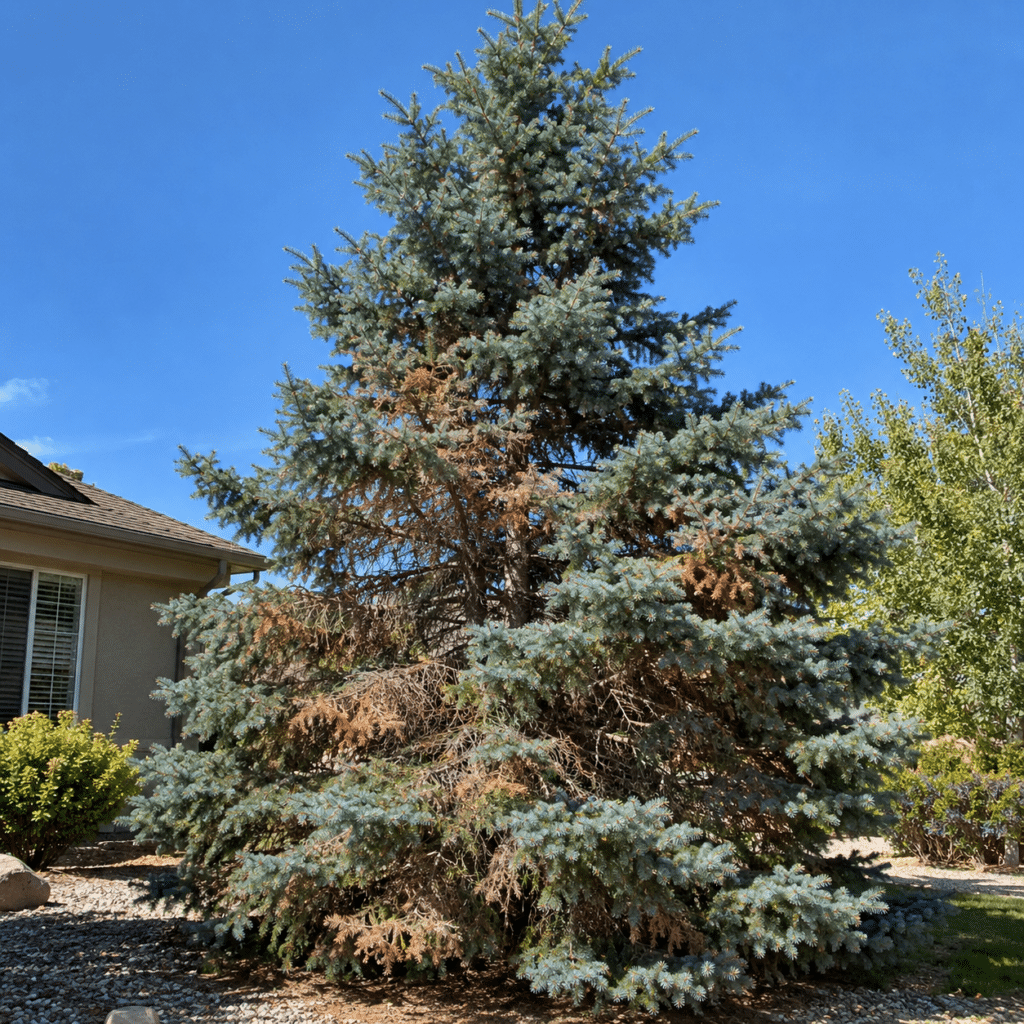
A blue spruce showing needle drop, discoloration, or thinning branches may be stressed from drought or soil issues, or it may have a disease or pest problem. The key difference comes down to where the symptoms show up, how fast they’re spreading, and whether the tree has any structural concerns. A certified arborist can tell you for sure.
A homeowner in the Gardnerville Ranchos, NV area recently reached out to us about a blue spruce in their front yard, roughly 25 feet tall, that wasn’t looking quite right. They weren’t sure if it was a serious problem or something minor. That’s one of the most common calls we get, and it’s a smart question to ask early.
Blue spruces are popular trees in northern Nevada, but they do have some specific vulnerabilities. At Joe Benigno’s Tree Service, we see these trees regularly and want to help you understand what you’re looking at before assuming the worst.
What Are the Most Common Signs a Blue Spruce Is in Trouble?
The most telling signs are needle loss, browning that starts from the inside out, cankers on branches, or a noticeable lean that wasn’t there before. Some of these point to stress. Others point to disease. Here’s how to read the difference:
- Inner needle drop: Losing older needles near the trunk every fall is normal. If new growth at the tips is also dying, that’s a red flag.
- Browning from the bottom up: This pattern often signals Rhizosphaera needle cast, a fungal disease very common in blue spruces.
- White or sticky residue on branches: Could be a sign of aphids or adelgids, both common spruce pests in Nevada.
- Sunken or discolored bark: This may indicate a canker disease, which can spread and eventually kill limbs.
- Sparse crown with healthy lower branches: Sometimes a sign of cytospora canker, which tends to move upward through the tree.
What Causes a Blue Spruce to Look Stressed Without Being Sick?
Drought stress, poor drainage, compacted soil, and planting depth are the most common culprits when a blue spruce looks off but doesn’t have a disease. Nevada’s dry summers are hard on these trees, especially when they’re established in front yards where they may not get consistent water.
A stressed tree isn’t immediately a dying tree. But stress does lower the tree’s defenses, which makes it more likely to develop a disease or attract pests. That’s why catching it early matters.
Our plant healthcare and arborist services are built around exactly this kind of assessment. A certified arborist can look at your tree’s full picture, soil conditions, watering history, and visible symptoms, and give you an honest recommendation.
Should I Be Worried About a 25-Foot Blue Spruce Near My House?
Size and proximity to your home absolutely matter when evaluating a spruce tree. A 25-foot tree with significant disease or structural weakness can become a hazard if a branch fails during a windstorm. That’s not meant to alarm you. It just means a professional set of eyes is worth it.
If the tree is otherwise healthy, the fix may be as simple as adjusting irrigation or treating for a fungal issue. If there’s more going on, you’ll want to know sooner rather than later. Learn more about our team’s experience and approach on our about page.
In cases where the tree has declined past the point of recovery, professional tree removal may be the safest path forward. We’ll always tell you honestly whether a tree can be saved before recommending removal.
Frequently Asked Questions
Can a blue spruce recover from needle cast disease?
Yes, if it’s caught early enough. Rhizosphaera needle cast is treatable with fungicide applications over a couple of seasons, combined with good cultural practices like proper spacing and irrigation. The sooner you identify it, the better the outcome.
How often should a blue spruce be inspected by an arborist?
We recommend a professional look every one to two years for established trees, and sooner if you notice any sudden changes in appearance. Early detection of disease or pest activity makes a significant difference in treatment options.
Is it normal for a blue spruce to lose needles in fall?
Some interior needle drop in autumn is completely normal. Blue spruces shed their oldest needles each year. The concern is when tip growth is dying, needles are turning purple or brown before dropping, or the thinning is spreading quickly across the crown.
Get a Free Arborist Estimate in the Gardnerville Ranchos, NV Area
If your blue spruce doesn’t look right and you’re not sure what you’re dealing with, don’t wait and wonder. We offer free on-site estimates throughout the Gardnerville Ranchos, NV area, and our certified arborist will give you a straight answer about what your tree needs.
Contact us today to schedule your visit. No pressure, no guesswork. Just honest advice from people who know trees.
