


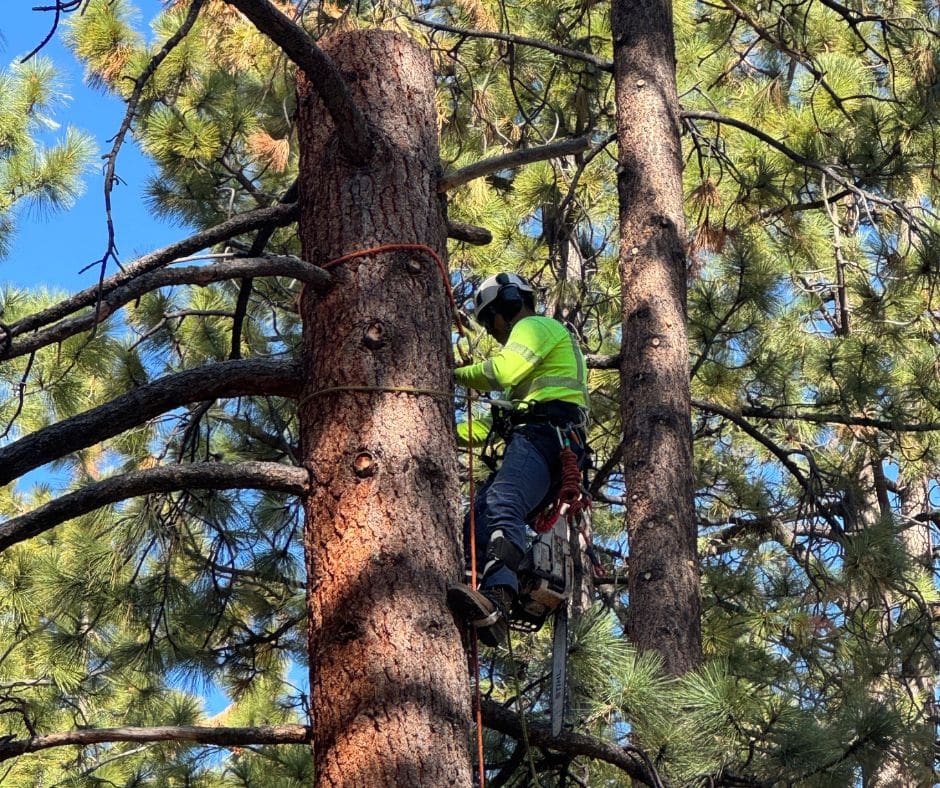
Pine trees can add beauty, shade, privacy, and valuable wind protection to properties throughout Genoa, NV and the surrounding Northern Nevada area. However, when a pine tree begins declining or dies, it can quickly become a serious safety hazard, especially with the region’s dry climate, seasonal storms, and strong winds. Many homeowners are unsure whether a struggling pine tree can recover or if removal is the safest option. Knowing the warning signs early can help prevent falling limbs, property damage, pest infestations, and tree removal.
Recently, we spoke with a homeowner who had one dead pine tree in the front yard and another in the backyard. Like many homeowners, they wanted to understand whether removal was necessary and how to handle trees that no longer appeared healthy.
What Are the Signs That a Pine Tree Needs to Be Removed?
A pine tree may need removal when it shows signs of severe decline, structural instability, disease, or death. While some issues can be treated if caught early, others indicate the tree is no longer safe to keep.
One of the clearest signs a pine tree needs removal is when the tree is fully dead. Dead pine trees often show symptoms such as:
- Brown or reddish needles throughout the canopy
- Large sections with no needles at all
- Brittle branches that snap easily
- Peeling or missing bark
- No new growth during the growing season
You can also perform a simple scratch test on smaller branches. If the layer beneath the bark is green, the branch may still be alive. If it is dry and brown, the tree may be dead.
Dead trees become increasingly unstable over time, especially during wind, snow, or storms. According to the USDA Forest Service, dead trees are more likely to fail structurally because decay weakens the wood over time.
Why Are Dead Pine Trees Dangerous?
Pine trees can become brittle after they die. As decay spreads through the trunk and root system, the tree loses structural strength. Strong winds, saturated soil, heavy snow, or even normal weather conditions can cause limbs or the entire tree to fall.
Dead trees near homes, driveways, fences, vehicles, or power lines pose the greatest risk. The International Society of Arboriculture recommends removing dead or hazardous trees promptly to reduce the chance of injury or property damage.
What Causes Pine Trees to Die?
Pine trees can decline for several reasons, and identifying the cause helps determine whether the tree can be saved or if removal is the better option.
Drought Stress. Extended dry periods can weaken pine trees and make them more vulnerable to disease and pests.
Pine Beetles and Insects. Bark beetles and other invasive pests can damage the tree’s vascular system and rapidly kill pine trees. The U.S. Forest Service notes that bark beetle infestations are a major cause of pine mortality in many regions.
Root Damage. Construction, trenching, soil compaction, or poor drainage can damage roots and destabilize the tree.
Disease and Fungus. Needle blight, root rot, cankers, and fungal infections can cause progressive decline.
Lightning or Storm Damage. Storms may crack trunks or weaken major limbs, increasing the likelihood of failure later.
Can a Pine Tree Be Saved Instead of Removed?
Sometimes, yes. If the tree still has healthy growth and the issue is caught early, treatment may help preserve the tree.
Signs a Pine Tree May Still Recover
- Only part of the canopy is discolored
- New buds or needles are still forming
- The trunk remains solid with no major cracks
- The tree is not leaning significantly
- There are no signs of extensive decay or root failure
In these situations, a professional tree inspection can determine whether pruning, fertilization, pest treatment, or soil improvements may help extend the tree’s life.
When Is the Best Time to Remove a Pine Tree?
Dead or hazardous trees should usually be removed as soon as possible, regardless of season. Waiting too long can make removal more dangerous and expensive if the tree becomes unstable.
However, many homeowners choose proactive removals before:
- Storm season
- Winter snow accumulation
- High wind periods
- Major landscaping projects
Early removal also helps prevent falling debris and reduces liability risks.
Should You Remove a Dead Pine Tree Yourself?
Tree removal can be extremely dangerous, especially with tall pine trees or trees located near homes, fences, or utility lines.
Professional tree removal crews use specialized equipment and safety procedures to remove hazardous trees safely. The Occupational Safety and Health Administration identifies tree work as a high-risk industry due to falling limbs, unstable trees, and chainsaw hazards.
Schedule a Pine Tree Inspection
If you are concerned about a dead or declining pine tree on your property, Joe Benigno’s Tree Service can help. We provide professional tree inspections, hazardous tree evaluations, and safe tree removal services to help protect your home and property. Contact us today to schedule your free estimate.
