


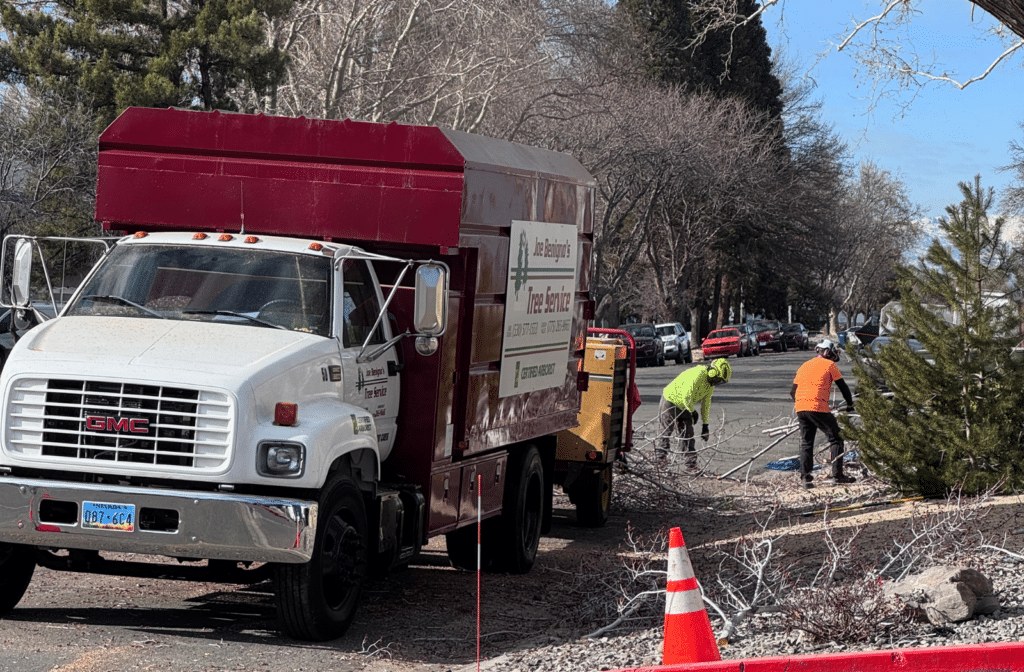
If you’ve noticed your sidewalk in Indian Hills, NV starting to crack, lift, or become uneven, the tree itself may be the root of the problem. Trees planted too close to walkways or driveways can lead to ongoing damage as they grow. While they add curb appeal and shade, some trees can become a safety hazard and compromise nearby structures. In these cases, professional tree removal is often the best way to protect your property and restore safe, even surfaces.
We recently spoke with a homeowner who noticed a flowering tree in their front yard was beginning to push up sections of their sidewalk, creating an uneven surface that was becoming a concern.
Why Do Tree Roots Lift Sidewalks?
Tree roots naturally grow outward in search of water, oxygen, and nutrients. Most roots stay within the top 12 to 18 inches of soil, which puts them directly beneath sidewalks and driveways. As these roots expand, they can push against concrete slabs and cause them to lift or crack.
Certain factors increase the likelihood of this happening:
- Shallow root systems that spread wide rather than deep
- Trees planted too close to sidewalks or hard surfaces
- Fast-growing tree species
- Compacted soil, which forces roots closer to the surface
According to the USDA Forest Service, tree roots can exert significant pressure as they grow, especially when confined by nearby structures like sidewalks or curbs.
Is It Dangerous When a Tree Lifts Your Sidewalk?
Yes, it can be. Uneven sidewalks are a common tripping hazard and can pose liability risks for homeowners. Beyond safety concerns, lifted concrete can also:
- Allow water to pool and cause further damage
- Lead to more extensive cracking over time
- Violate local property maintenance codes in some areas
If the sidewalk is significantly raised or uneven, it’s important to address the issue sooner rather than later.
How Do You Know if the Tree Needs to Be Removed?
Not every situation requires full tree removal. The right solution depends on the extent of the damage and the health of the tree.
Signs removal may be necessary:
- The roots are causing severe or widespread lifting
- The tree is too close to the sidewalk or foundation
- The tree shows signs of poor health or instability
- Root pruning would likely destabilize the tree
Situations where alternatives may work:
- Minor lifting that can be corrected by sidewalk leveling or grinding
- Selective root pruning, if it won’t harm the tree
- Installing root barriers to redirect future growth
We always evaluate both the tree and the surrounding area before recommending removal. In many cases, preserving a healthy tree is possible with the right approach.
Can You Fix the Sidewalk Without Removing the Tree?
In some cases, yes. Depending on the severity of the damage, homeowners may be able to:
- Grind down raised sections of concrete
- Replace or re-pour affected slabs
- Adjust the walkway to accommodate root growth
However, if the root system continues to expand, the problem may return. That’s why it’s important to address both the sidewalk and the underlying cause.
What Is the Best Long-Term Solution?
The best long-term solution balances safety, property protection, and the health of your landscape. This often involves a professional assessment of:
- The tree’s condition
- The extent of root growth
- The impact on surrounding structures
From there, we can recommend whether removal, pruning, or mitigation is the most effective path forward.
FAQs About Tree Roots and Sidewalk Damage
Can tree roots damage more than just sidewalks?
Yes. Tree roots can also impact driveways, patios, retaining walls, and even foundations if planted too close.
How far should a tree be planted from a sidewalk?
It depends on the species, but many trees should be planted at least 10 to 20 feet away to prevent root interference.
Will cutting roots kill the tree?
It can. Removing large or critical roots may weaken or destabilize the tree, which is why root pruning should always be done carefully and professionally.
How do I know if a tree is becoming a safety risk?
Look for signs like leaning, exposed roots, cracking soil, or damage to nearby structures. These can indicate that the tree may no longer be stable.
Schedule a Professional Tree Evaluation
If you’re dealing with a tree that’s lifting your sidewalk, it’s important to get a professional opinion before the problem gets worse. At Joe Benigno’s Tree Service, we help homeowners evaluate their trees and recommend the safest, most effective solutions for their property.
Contact us today to request an estimate. We’re here to help you protect your home, your landscape, and your peace of mind.
