


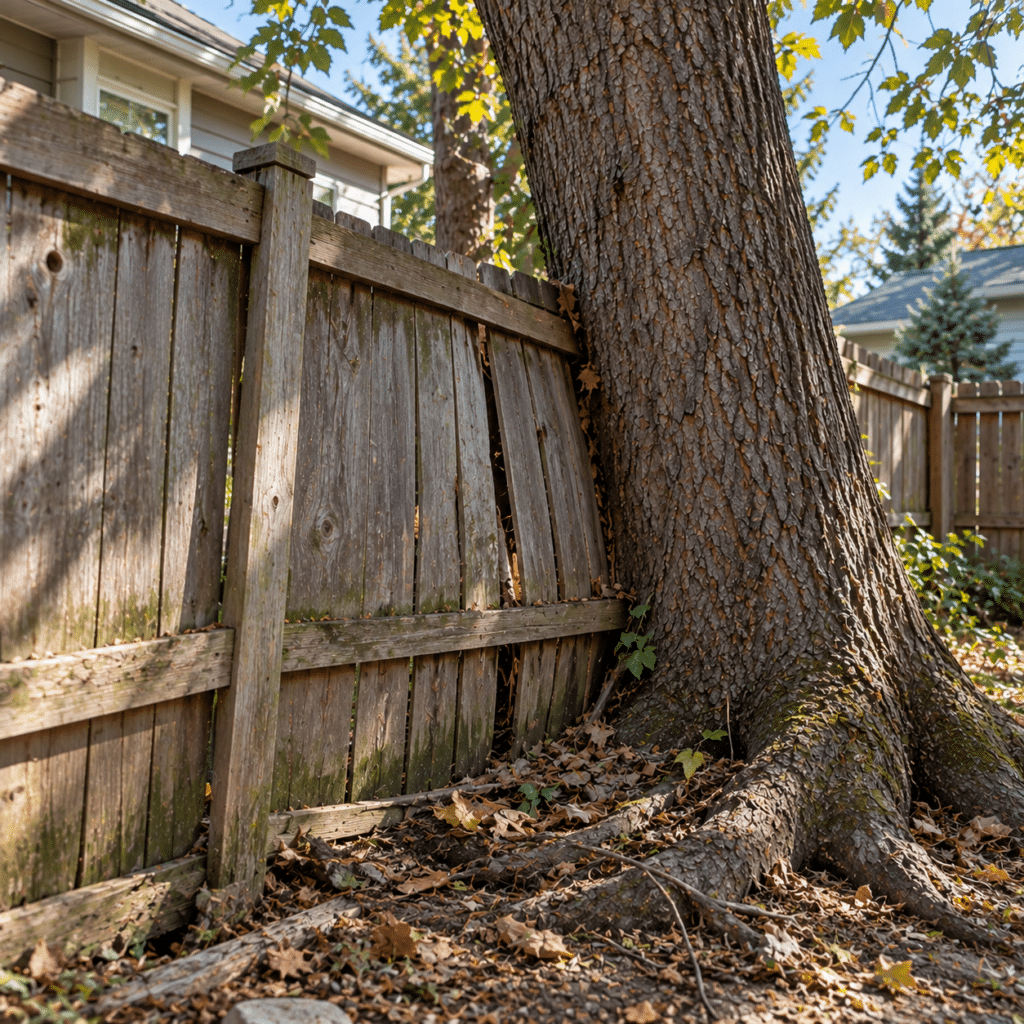
Yes, a large tree in a small backyard can absolutely damage your fence. As the trunk and roots grow, they push posts out of line, crack panels, and can even affect your neighbor’s property. If the tree is already bowing the fence, removal is usually the safest long-term fix.
A homeowner in Virginia Foothills, NV recently called us about exactly this. A big tree had been planted years ago in a tiny backyard, and it was slowly shoving the fence into the neighbor’s yard. It is a more common problem than most people realize, especially in newer neighborhoods where trees were planted close to property lines.
We have been removing trees in the Virginia Foothills area for years, and we have seen how a “nice little tree” turns into a big headache. Here is how to tell if yours has crossed that line.
How does a tree actually damage a fence?
A tree damages a fence in two ways: the trunk grows wider and pushes directly against the boards, and the roots spread underground and heave posts out of position. Both forces are slow, steady, and hard to stop once they start.
In a small yard, there is simply nowhere for the tree to go. A trunk that started a few inches from the fence can swell until it presses against it. Roots can also lift concrete footings and shift posts, so the fence leans even if the trunk never touches it.
Watch for these early warning signs:
- Fence panels bowing or bulging toward the neighbor’s side
- Posts leaning or sitting at different heights
- Gaps opening between boards or between the fence and the ground
- Cracked or lifted soil, patio, or pavers near the trunk
- Bark pressed tight against the fence boards
When is removal better than trimming in a small yard?
Removal is the better choice when the trunk or roots are already pushing on the fence, because trimming only controls the branches, not the trunk or roots. Pruning the canopy will not stop a trunk from growing wider or roots from spreading.
If the damage is just overhanging branches or a bit of shade, our tree trimming and pruning services may be all you need. But once the structure is being pushed, you are fighting the tree’s basic growth.
Removal usually makes sense when:
- The fence is visibly bowing, leaning, or breaking
- The tree is a large species planted too close to a boundary
- Roots are lifting patios, walkways, or foundations
- The tree is crowding your home, or your neighbor’s, with little room to grow
What makes removing a tree in a tight Virginia Foothills, NV backyard tricky?
Tight backyards limit access, so crews often have to take the tree down in sections rather than felling it whole. With fences, structures, and neighboring properties close by, there is no room to drop a tree in one piece safely.
That is where experience matters. Our crews use careful rigging and controlled cuts to lower sections of the tree, protecting your fence, your roof, and the neighbor’s yard. Every job is a little different, so we always look at the site in person first. Learn more about our team and our experience if you want to know who will be working at your home.
If you need the whole tree gone, take a look at our tree removal service to see how we handle the job from start to finish.
What should I do before I call a tree service?
Take a few photos, note where the damage is, and check whether the fence is shared with a neighbor. That gives your estimator a head start and helps you plan for any conversations with the people next door.
- Photograph the trunk, the fence, and any leaning or bowed sections
- Check your HOA rules or local requirements for removing mature trees
- Talk to your neighbor if the fence is shared or the tree overhangs their yard
- Decide whether you also want the stump ground out afterward
Cost depends on the size of the tree, access, and the scope of the work, so a free in-person look is the only way to get an accurate quote. Reach out to Joe Benigno’s Tree Service and we will walk the property with you.
Frequently asked questions
Can tree roots really move a fence post?
Yes. As roots thicken, they can lift or shift concrete footings and push posts out of alignment. You will often see leaning or uneven posts well before you notice anything wrong with the tree itself.
Who is responsible if my tree damages my neighbor’s fence?
Rules vary, but generally the tree owner can be responsible when damage comes from a tree on their property. It is smart to deal with the problem early and talk with your neighbor before it escalates.
Will I need to remove the stump too?
Not always, but many homeowners do, especially in small yards where a leftover stump takes up valuable space. Stump grinding can be done after the tree is down, and we are happy to talk through your options.
Ready to get that tree out of your fence line in Virginia Foothills, NV?
If a big tree is crowding your fence or your small backyard, do not wait for the damage to get worse. Contact us today to schedule a free estimate in Virginia Foothills, NV, and we will take a look and give you honest advice on your best options.
