


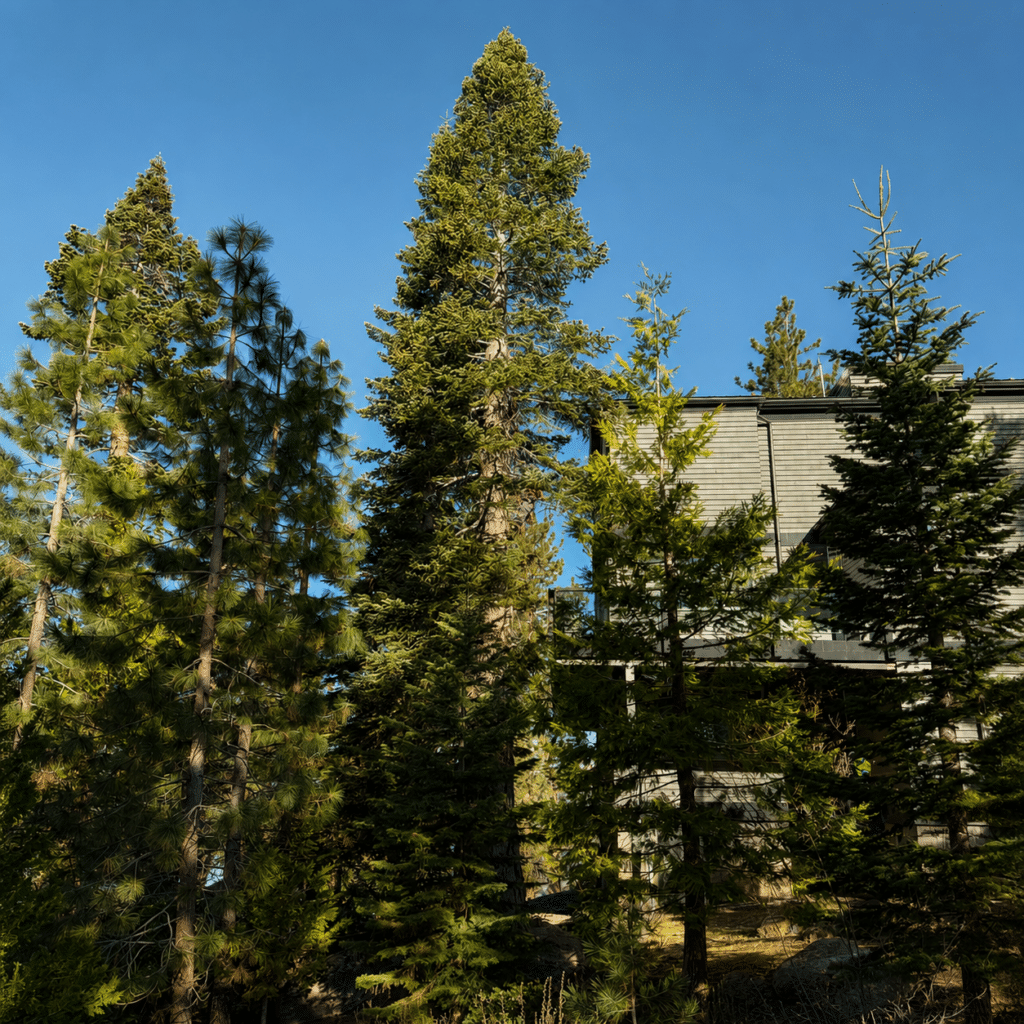
Most mature trees can tolerate 2 to 4 weeks without supplemental watering during summer, depending on soil type, tree species, and recent rainfall. However, in hot, dry climates like the high desert of Nevada, that window narrows quickly. After 2 weeks without water in peak summer heat, stress symptoms can begin to appear even in well-established trees.
A homeowner in the Gardnerville Ranchos, NV area recently called us in a situation many people find themselves in: recovering from surgery and unable to drag hoses around a 3-acre property, while knowing their 40-plus trees and shrubs had gone 15 days without water. It is a genuinely stressful position, and it raises a question a lot of homeowners never think to ask until they are already in trouble.
At Joe Benigno’s Tree Service, we work with homeowners across the region who care deeply about their trees and want real answers. So let us break this down properly.
What Happens to Trees When They Go Too Long Without Water?
When trees are deprived of water for too long, they enter drought stress, a condition that weakens their defenses and can cause lasting damage if not addressed. The tree starts pulling moisture from its own leaves and smaller branches to protect its core structure. You might not see obvious damage for weeks, but the stress is already happening underground and in the canopy.
Common signs of drought stress in trees and shrubs include:
- Leaves that are wilting, curling, or folding inward
- Premature yellowing or browning of leaf edges (called scorch)
- Early leaf drop before fall
- Bark that looks cracked or sunken in spots
- Smaller-than-normal leaf size
- Branches that feel brittle or snap easily
The tricky part is that some of these symptoms show up weeks after the actual stress occurred. By the time you see the damage on the outside, the tree has already been struggling for a while.
Does It Matter Whether a Tree Is Mature or Young?
Yes, it matters a lot. Mature trees generally handle drought better than young trees because their root systems are deeper and more established. A young tree planted within the last 2 to 3 years has a shallow, limited root zone and can suffer serious damage in as little as 7 to 10 days without water during a Nevada summer.
Mature trees have roots that may extend 2 to 3 times the width of their canopy and dig deeper into the soil where some moisture still exists. That gives them a buffer. But even mature trees have limits, especially when temperatures are consistently above 90 degrees and the soil is sandy or rocky, which is common across the Carson Valley and surrounding high desert areas.
Shrubs are typically more shallow-rooted than large trees, which means they run out of accessible soil moisture faster. Ornamental shrubs planted near structures or on slopes are especially vulnerable because runoff and reflected heat accelerate drying. If you have a mix of shrubs and trees, your shrubs are likely showing stress first.
How Often Should You Water Mature Trees During a Nevada Summer?
For most mature trees in the Gardnerville Ranchos, NV area, deep watering every 10 to 14 days during peak summer months is a solid baseline. The key word is deep. A quick surface spray does very little. You want water to penetrate 12 to 18 inches into the soil to actually reach the root zone where the tree can use it.
Here are some practical watering tips for mature trees in hot, dry climates:
- Water slowly and deeply at the drip line, not right at the base of the trunk
- Use a soaker hose or let a regular hose run at low pressure for 30 to 60 minutes per tree
- Water in the early morning to reduce evaporation loss
- Mulch around the base of each tree to retain soil moisture between watering sessions
- Avoid watering the trunk directly, which can lead to rot and fungal issues
If your property has dozens of trees spread across multiple acres, that watering routine adds up fast. It is physical, time-consuming work, especially in the summer heat.
When Does Tree Drought Stress Become a Safety Issue?
Drought-stressed trees are significantly more vulnerable to pest infestation, fungal disease, and structural failure, all of which can create real safety hazards on your property. A tree that has been chronically under-watered over multiple seasons may develop internal decay that is not visible from the outside until a limb or the whole tree comes down unexpectedly.
In Nevada’s high desert, bark beetles are a particular concern. These insects are attracted to weakened, drought-stressed trees and can kill an otherwise healthy tree quickly once they establish a colony. A tree that looks fine in May can be dead or dying by September if it enters the season already stressed.
If a tree reaches the point of structural compromise, you may need to consider professional tree removal to prevent damage to your home, fencing, or other structures. That is never the outcome anyone wants, but catching drought stress early gives you options. Ignoring it removes them.
Frequently Asked Questions
Can a tree fully recover after going 3 to 4 weeks without water in summer?
Yes, many healthy mature trees can recover from a single extended dry period, especially if they were in good health beforehand. Resume a deep watering schedule, add mulch around the base to retain moisture, and monitor the canopy for stress symptoms over the following 4 to 6 weeks. If foliage does not improve or worsens, consult an arborist.
How do I know if my tree is drought-stressed or actually dying?
Scratch a small section of bark on a young branch with your fingernail. If the layer underneath is green and slightly moist, the tree is alive and likely recoverable. If it is brown, dry, and brittle all the way through, that branch may already be dead. A certified arborist can assess the whole tree and tell you whether you are dealing with stress or something more serious.
Does the type of tree affect how long it can go without water?
Absolutely. Native and drought-tolerant species like pinyon pine, juniper, and certain oaks are adapted to dry conditions and can handle longer gaps between watering. Non-native ornamental trees, fruit trees, and recently transplanted specimens are far more sensitive. If you are not sure what species you have, an arborist can identify them and give you species-specific watering guidance.
Should I fertilize a drought-stressed tree to help it recover?
No, not right away. Fertilizing a stressed tree adds to the work its root system has to do at a time when it is already struggling. Focus on restoring consistent moisture first. Once the tree shows signs of recovery and active new growth, you can consider a light, slow-release fertilizer program under the guidance of an arborist.
Need Help Caring for Your Trees?
Whether you need a professional arborist to assess drought stress, help keeping up with a large property, or guidance on a watering schedule that actually fits your trees and your climate, we are here to help. Homeowners across the Gardnerville Ranchos, NV area trust us with their trees because we give straight answers and do the work right.
Do not wait until a stressed tree becomes a damaged tree. Contact us today to schedule a consultation or ask us anything about your property. We are happy to talk through your situation and point you in the right direction.
